




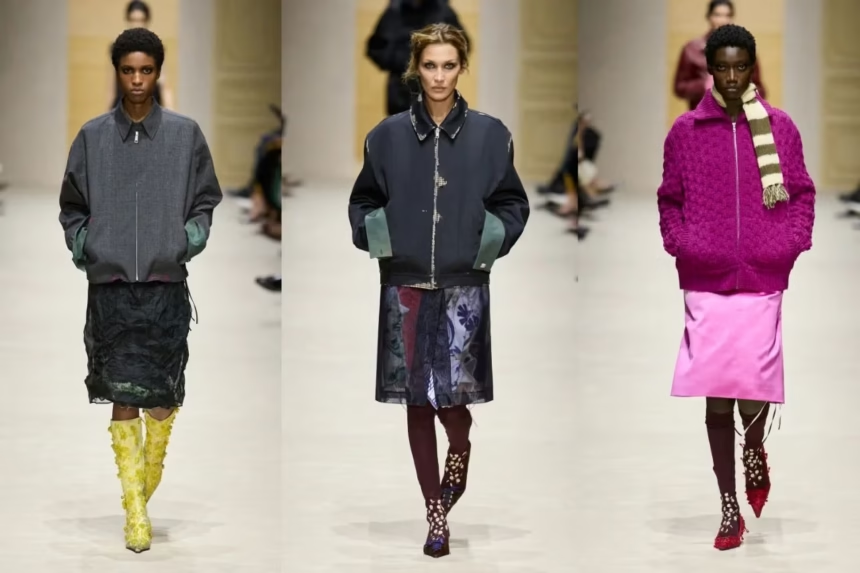
With Prada gaining momentum, Miu Miu maintaining its influence and Versace entering a new creative era, the Italian fashion group is preparing for its next chapter.
In Los Angeles, luxury is rarely limited to what appears on a runway. It moves between fashion, film, art, hospitality and entertainment, shaping the way brands present themselves to an audience that expects more than an expensive product. Prada Group appears to understand that expectation clearly.
Following a strong first half of 2026, the Italian luxury company is entering what executives describe as a new phase of growth. The strategy centers on three distinct priorities: maintaining Prada’s steady momentum, protecting Miu Miu’s cultural appeal and rebuilding Versace through a renewed creative direction.
Prada Group reported revenue of 3.05 billion euros for the six months ending June 30, an increase of 11 percent from the same period last year. At constant exchange rates, revenue rose 16 percent. The Americas delivered one of the company’s strongest performances, with sales increasing 30 percent to 572 million euros.
For a luxury industry facing cautious consumers, geopolitical uncertainty and unpredictable currency movements, the results suggest that Prada’s combination of recognizable design and cultural relevance continues to resonate.
Prada Looks Beyond the Entry Level Customer
Prada’s retail sales reached 1.62 billion euros during the first half of the year. Organic sales rose 3.3 percent, while second quarter growth accelerated to 6.3 percent.
The company now sees a larger opportunity among its wealthiest customers.
Chief executive officer Andrea Guerra told analysts that Prada has historically maintained a relatively narrow range of prices. While the company intends to preserve accessible entry points within its luxury positioning, it also plans to expand its selection for clients willing to spend significantly more.
The goal is not simply to raise prices. Prada wants to offer more exclusive products, stronger personal service and richer experiences for customers at the highest end of the market.
That approach is especially relevant in cities such as Los Angeles, where luxury customers often move across several worlds at once. A client purchasing a handbag may also be collecting contemporary art, attending premieres, traveling internationally and seeking private experiences that cannot be reproduced through standard retail.
Prada’s challenge will be to serve that customer without losing the intellectual restraint and unconventional creativity that have long distinguished the brand.
Miu Miu Protects Its Momentum
Miu Miu remains one of the group’s most closely watched brands.
Retail sales rose 2.5 percent to 763 million euros during the first half of 2026. The increase may appear modest compared with the brand’s explosive growth in previous periods, but executives emphasized that the latest results were measured against an unusually strong second quarter last year.
Rather than using Miu Miu’s popularity as an excuse to enter every possible category, Prada Group is taking a more disciplined approach. Guerra said the company has rejected many proposals involving licensing, menswear and other potential expansions.
That restraint could prove valuable.
Fashion history is filled with brands that diluted their identities by growing too quickly. Miu Miu’s appeal comes from its specific point of view, one that blends youthfulness, intelligence, nostalgia and a slightly rebellious sense of femininity. Protecting that identity may be more important than chasing short term volume.
For Los Angeles stylists, performers and creative professionals, Miu Miu has become more than a label. It operates as a visual language, capable of appearing playful, awkward, polished and subversive at the same time.
Versace Begins a New Creative Chapter
Versace represents the most significant transformation within the group.
The brand recorded sales of 350 million euros as Prada Group worked to improve retail execution and strengthen the quality of its business. Ten stores were closed as part of a broader review of the retail network.
A new creative era began on July 1 with the arrival of chief creative officer Pieter Mulier. His first collection for the house, titled La Vacanza, is scheduled to arrive in stores in May 2027.
Mulier takes on one of fashion’s most recognizable legacies. Versace is associated with bold color, sensuality, celebrity and the unapologetic glamour that helped define several decades of popular culture. Those qualities also make the brand particularly relevant to Los Angeles, a city where fashion and performance are often inseparable.
The task will be to respect that heritage while giving the house a sharper contemporary identity.
Versace does not need to become quieter. It needs to become more precise.
The Store Becomes a Cultural Destination
Prada Group is also investing in a broader definition of retail.
A major Prada Galleria project is expected to open in Milan in September. Located within the historic Galleria Vittorio Emanuele II, the development will combine women’s and men’s fashion, private client services, food, art and exhibitions.
The concept reflects a larger shift taking place across luxury. Stores are no longer expected to function only as places of transaction. They must provide atmosphere, access, storytelling and a reason to stay.
Prada has already built a reputation for connecting fashion with architecture, cinema, art and intellectual culture. The Milan project brings those disciplines together in a single physical environment.
For Los Angeles, where destination retail continues to compete with private shopping, digital convenience and invitation only experiences, Prada’s strategy offers a clear message. The future of luxury may depend as much on the world surrounding the product as the product itself.
Creativity Remains the Main Currency
Prada Group’s financial picture is not without pressure. Adjusted operating profit declined 14.3 percent to 530 million euros, while net profit fell 15.2 percent to 327 million euros. Sales in the Middle East were also affected by regional conflict, and the company continues to navigate an uncertain global environment.
Still, its brands enter the second half of the year with distinct identities and considerable cultural influence.
Prada is expanding its ambitions at the highest end of the market. Miu Miu is resisting the temptation to overextend. Versace is preparing for a creative reinvention.
Together, they reveal a luxury group betting that long term growth will come from more than scale. It will come from clarity, creativity and the ability to make customers feel that they are entering a world unavailable anywhere else.