






From sparkling mixed-media portraits to thought-provoking installations about identity and history, the California African American Museum is giving Los Angeles an exciting new reason to explore its creative side.
- A Colorful New World Arrives in Los Angeles
- From Detroit to Antarctica: Art Without Limits
- Fred Wilson Turns Everyday Objects Into Powerful Statements
- The Installation That Asks Us to Look Again
- Why These Exhibitions Matter for Los Angeles
- What Visitors Can Expect Next
- A Different Kind of Los Angeles Spotlight
Los Angeles may be famous for Hollywood premieres, glamorous celebrity parties, and luxury shopping destinations, but another side of the city is demanding attention today.
On Tuesday, November 17, 2026, the California African American Museum in Exposition Park opened two major exhibitions that bring together bold contemporary art, powerful cultural histories, and fresh perspectives on identity.
The exhibitions, Jamea Richmond-Edwards: Another World and Yet the Same and Fred Wilson: Reflections, offer visitors two distinctive artistic experiences.
One celebrates color, imagination, fashion, and the visual culture of Detroit.
The other uses reflective surfaces, unexpected objects, and historical symbolism to challenge the way we understand culture and representation.
Together, they are helping make Exposition Park one of Los Angeles’ most compelling cultural destinations this season.
And for a city that thrives on artistic reinvention, the timing feels especially appropriate.
A Colorful New World Arrives in Los Angeles
For Detroit-based artist Jamea Richmond-Edwards, today’s opening marks an important career milestone.
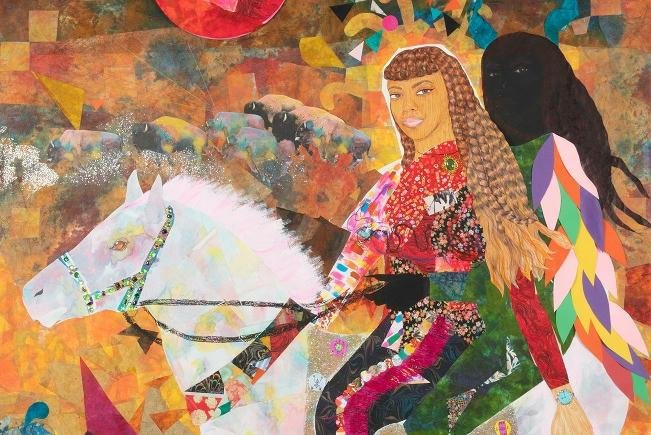
Another World and Yet the Same is her first solo exhibition in Los Angeles, introducing local audiences to an imaginative artistic universe filled with vivid colors, intricate patterns, and richly layered portraits.
Her works incorporate unconventional combinations of materials, including acrylic paint, fabric, construction paper, glitter, and rhinestones.
The result is artwork that frequently resembles an intersection between fashion illustration, collage, portraiture, and visual storytelling.
Human figures appear dressed in elaborate garments, surrounded by striking decorative backgrounds that reward closer observation.
But beyond their visual beauty, these works explore themes connected to family, cultural memory, migration, and the African diaspora.
Richmond-Edwards draws heavily from the people and places that have influenced her life, particularly the musical and cultural traditions of Detroit.
Jazz, soul, Motown, techno, and hip-hop all contribute to the creative language of her work.
The connection between art and music is especially significant.
Rather than treating painting as a purely visual medium, Richmond-Edwards creates images filled with a sense of rhythm, movement, and personality.
In a city like Los Angeles, where fashion, music, film, and art frequently influence one another, her multidisciplinary approach feels particularly relevant.
From Detroit to Antarctica: Art Without Limits
Among the exhibition’s most imaginative elements is a recent group of collaged paintings inspired by the seventeenth-century novel Mundus Alter et Idem.
Richmond-Edwards reinterprets the literary work as a journey undertaken by modern travelers moving from Detroit to Antarctica in pursuit of freedom.
The unexpected destination transforms the story into something more symbolic than geographical.
The journey becomes a vehicle for exploring ideas of migration, liberation, identity, and transformation.
Rather than presenting history as something fixed or distant, the artist imagines new possibilities through fantastical landscapes and vibrant visual narratives.
Her approach also challenges expectations about how Black identity is represented in contemporary art.
The works move beyond familiar historical imagery, incorporating fantasy, beauty, and imaginative storytelling as equally important parts of cultural expression.
For museum visitors, the exhibition offers an opportunity to appreciate both the aesthetic details and the deeper questions beneath them.
What does freedom look like?
How do the places we come from influence the futures we imagine?
And how can art create space for experiences that conventional historical narratives have overlooked?
These are among the questions Richmond-Edwards’s work invites audiences to consider.
Fred Wilson Turns Everyday Objects Into Powerful Statements
Opening alongside Richmond-Edwards’s exhibition is Fred Wilson: Reflections, the artist’s first major museum survey in more than a decade.
Wilson has built an influential career questioning how museums, institutions, and historical collections shape public understanding.
Rather than simply presenting objects for admiration, his work encourages viewers to question their meaning, placement, and cultural associations.
The exhibition brings together works created from 2003 onward, including his distinctive black-and-white Murano glass chandeliers, mirrors, sculptural glass forms, and paintings of flags.
At first glance, some of these pieces might resemble decorative objects associated with luxury interiors.
But their beauty carries deeper significance.
Wilson uses materials, colors, and historical references to explore questions about racial identity, memory, power, and representation.
His artistic practice frequently challenges the assumption that museums offer neutral interpretations of history.
What appears in a collection, what gets overlooked, and how objects are presented can profoundly influence what audiences learn.
For visitors, the experience becomes an invitation to reconsider the stories that surround familiar objects.
The Installation That Asks Us to Look Again
A particularly compelling element of Wilson’s exhibition is Black Now!, a conceptual installation assembled from thousands of objects collected by the artist since 2005.
The objects relate to the color black or to ideas and associations surrounding Blackness.
Presented together, they create opportunities to examine how meaning changes according to context.
An ordinary object can carry very different associations depending on its history, presentation, or relationship to other objects.
Wilson’s work encourages audiences to become more aware of those differences.
In an era when conversations about representation and cultural history remain central to public life, the installation offers a distinctive artistic approach to important social questions.
It also demonstrates why contemporary art can be more than an aesthetic experience.
Sometimes, it becomes a tool for understanding how people interpret the world around them.
Why These Exhibitions Matter for Los Angeles
The simultaneous opening of these two exhibitions reinforces the California African American Museum’s importance within the city’s cultural landscape.
Located in Exposition Park, the institution is dedicated to sharing African American art, history, and culture through exhibitions and public programming.
These new presentations approach that mission from different directions.
Richmond-Edwards emphasizes personal history, community, fashion, music, and imaginative possibilities.
Wilson examines historical narratives, institutional authority, and the cultural meanings attached to everyday objects.
Together, their work demonstrates the extraordinary diversity of contemporary Black artistic expression.
The exhibitions also make an important contribution to Los Angeles’ identity as a destination for visual art.
Although the city is frequently associated with movies and television, its museums and galleries help support a much wider creative community.
The arrival of major exhibitions gives visitors an opportunity to experience culture away from the usual entertainment-industry spotlight.
And because admission to the California African American Museum is free, these exhibitions are accessible to audiences who might otherwise be discouraged by the cost of attending cultural attractions.
What Visitors Can Expect Next
Both exhibitions are scheduled to remain on view through April 4, 2027, giving Los Angeles residents and visitors several months to experience the work.
To mark the opening, the museum scheduled a special artist walkthrough with Jamea Richmond-Edwards today, November 17.
Additional programming includes a conversation between Fred Wilson and curator Gannit Ankori on November 18, followed by a zine-making workshop related to Richmond-Edwards’s exhibition on November 22.
These events extend the experience beyond viewing artwork, offering opportunities for visitors to engage more closely with the artists’ ideas and creative processes.
The programming also reflects a growing interest in museums as spaces for participation, education, and community connection.
For Los Angeles, that is an exciting possibility.
A cultural destination can be more than a place where people quietly observe beautiful objects. It can become a meeting point for ideas, discussion, and shared creative experiences.
A Different Kind of Los Angeles Spotlight
In Hollywood, success is often measured through box-office records, celebrity recognition, and international visibility.
But the city’s cultural influence is equally shaped by artists working outside traditional entertainment.
The opening of these exhibitions offers a reminder that Los Angeles’ creative identity extends far beyond studio productions and red-carpet events.
Art can celebrate beauty while addressing history. It can honor tradition while imagining entirely different futures.
And sometimes, it can change the way visitors understand the world without requiring a single word.
For HEYLA readers searching for something meaningful, inspiring, and visually extraordinary, the California African American Museum’s latest exhibitions present an exciting new cultural opportunity.
This week, some of the most important stories in Los Angeles aren’t unfolding on a movie screen.
They’re hanging on museum walls and waiting to be discovered.
HEYLA’S TAKE: Los Angeles doesn’t need another red carpet to make a cultural statement. Sometimes the boldest creativity happens inside a museum, where art, identity, and imagination come together.